
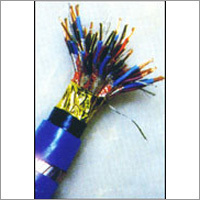
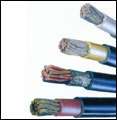
Instrumentation Screened Cables
200 INR/Meter
Product Details:
- Features High flexibility, Excellent shielding, Low signal loss, Flame retardant, RoHS compliant
- Diameter Varies by construction (typically 6-25 mm)
- Impedance Not specified (typically 100-120 Ohm for data cables)
- Number of Conductor 1 pair to 50 pairs (customizable)
- Conductor Shape Round
- Weight Depends on construction (approx. 80-200 kg/km)
- Tensile Strength Good - Recommended for flexible laying
- Click to View more
X
Instrumentation Screened Cables Price And Quantity
- 50 , , Meter
- 200 INR/Meter
Instrumentation Screened Cables Product Specifications
- N/A (Bare cable supplied)
- Black, Grey, Blue (cores color-coded)
- High flexibility, Excellent shielding, Low signal loss, Flame retardant, RoHS compliant
- Varies by construction (typically 6-25 mm)
- Not specified (typically 100-120 Ohm for data cables)
- 1 pair to 50 pairs (customizable)
- Process control, Data transmission, Instrumentation, Industrial Automation
- Depends on construction (approx. 80-200 kg/km)
- Round
- Instrumentation Screened Cable
- Screened, Multi-core, Flexible
- Good - Recommended for flexible laying
- Black/Grey
- -30C to +70C
- 100m Roll; Diameter varies with core number
- High purity copper
- PVC/XLPE
- 300/500V
- -20C to +60C
- 2 kV/min
- Control panels, transmission of analog/digital signals, refineries, chemical plants
- -30C to +70C
- PVC
- 0.5 sqmm, 0.75 sqmm, 1.0 sqmm, 1.5 sqmm, 2.5 sqmm, and others
- Annealed Tinned Copper
- Stranded
- Optional - Galvanized Steel Wire (GSWA)
- 100 meters (standard); Custom lengths available
- PVC/XLPE, Tinned copper, Aluminum Mylar (shield)
- Tinned copper braid
- PVC/XLPE
- Indoor/Outdoor, Duct, Trunking, Fixed or Flexible laying
- 2 core, 3 core, 4 core, up to 61 cores or as specified
Instrumentation Screened Cables Trade Information
- 1000 , , Meter Per Day
- 1-7 Days
- All India
Product Description
Instrumentation Screened Cables
Find application in power generation and distribution, the offered Instrumentation Screened Cables are known for their high endurance and sturdy construction. These cables are manufactured by making use of supreme quality raw materials and innovative techniques at our well-equipped production unit. Our quality analysts check the provided cables on several parameters of quality before delivering at clients end. In addition, we offer these Instrumentation Screened Cables in different thicknesses and lengths at industry leading rates.
Key Features:
- Excellent finish
- Optimum physical and electrical property
- High strength
- Flexibility
The series of Instrumentation Screened Cables offered by us are ideal for signal transmission and process control. These cables are very important for safekeeping of various factors like productivity, quality, cost and control of complete plant. The said plant can be of any industry such as Aluminum Plants, Fertilizers, Oil Refineries, Petrochemical, Power Generation & Distribution, Steel Plants and Other Engineering Industries.
The Instrumentation Screened Cables are shielded or screened using aluminum-mylar tape with tinned copper braided or copper drain wire. Each type of shielding has its own benefits and the type of shielding depends solely on the type of application. For low signal speed, braid screen is enough; but for high signal speed, it is better to use a composite foil or foiled screen & braid screen. An additional feature is to use individually screened pairs for decreasing the effects of cross talk, hence allowing the data transmission over long distances. The Instrumentation Screened Cables are protected from mechanical stress with the armoring of Flat Strip / Flexible Braiding / Galvanized Steel Wire.
The shielding is done for the prevention of harmful electrostatic interference. The top 3 reasons / benefits of electrostatic shielding in the screened cables are as follows:
- External electrical disturbances do not affect the cable signal.
- The cable signal is NOT Detectable, except at the ends of cable.
- Cross talk : Elimination of non-important and abdicable signal transfer amidst the circuit of same cable.
Versatile Construction
Instrumentation Screened Cables are engineered in paired, triad, and single core versions, supporting applications requiring high signal integrity. With customization options for core numbers, sheath material, and armoring, they cater to diverse industrial requirements, ensuring optimal compatibility and flexible installation.
Superior Shielding and Durability
Featuring an 85% coverage tinned copper braid shield, these cables minimize electromagnetic interference and signal loss. The optional UV stabilized and oil-resistant jackets, along with flame retardant compliance, make them ideal for tough industrial settings, ensuring long-lasting, reliable performance even in humid or corrosive environments.
Compliance and Safety
Committed to safety and environmental standards, these cables comply with IEC 60332-1, IS 1554 Part I flame retardance, and RoHS & REACH directives. This ensures dependable operation while minimizing environmental impact, making them suitable for industries with stringent compliance demands.
FAQs of Instrumentation Screened Cables:
Q: How do instrumentation screened cables with pairing option enhance signal integrity in industrial applications?
A: These cables utilize tinned copper braid shielding with over 85% coverage, paired or triad core arrangements, and high-purity copper conductors to significantly reduce electromagnetic interference and crosstalk, ensuring reliable signal transmission for control and data applications.Q: What are the main benefits of using these cables in process control or automation systems?
A: They offer high flexibility, excellent shielding, low signal loss, and robust flame, moisture, UV, and oil resistance. This combination ensures dependable performance, safeguarding sensitive signals even in challenging plant or factory conditions.Q: Where can instrumentation screened cables be installed, and what environments are they suitable for?
A: Installation is possible in control panels, refineries, chemical plants, and both indoor and outdoor industrial environments. Their robust moisture, flame, and UV resistance makes them suitable for humid, corrosive, or outdoor locations as well as standard indoor applications.Q: How can customers customize these cables according to their requirements?
A: Customers can select cable configurations such as paired, triad, or single/multi-core, specify core numbers (from 1 pair up to 50 pairs or more), choose sheath types (UV or oil resistant), color codes, insulation material (PVC/XLPE), and order standard or custom lengths.Q: When should oil resistant or UV stabilized jacketing be specified?
A: Oil resistant jackets are recommended when cables are exposed to oils, coolants, or lubricants, such as in refineries or machinery environments. UV stabilized jackets should be chosen for outdoor installations or areas with direct sunlight exposure, to enhance durability.Q: What is the recommended minimum bending radius and why is it important?
A: The recommended minimum bending radius is 10 times the overall diameter of the cable. Adhering to this guideline prevents internal damage, maintains cable integrity, and prolongs service life during installation and operation.Q: What international and environmental standards do these cables meet?
A: Instrumentation screened cables comply with IEC 60332-1 and IS 1554 Part I fire safety standards and are RoHS & REACH compliant for hazardous substance restriction and responsible manufacturing practices, meeting the global industry standards for safety and environmental responsibility.Tell us about your requirement

Price:
Quantity
Select Unit
- 50
- 100
- 200
- 250
- 500
- 1000+
Additional detail
Mobile number
Email

Other Products in 'Electric Cables' category

 Contact Us
- Plot No. 18, 2nd Floor, Rabindra Sarani,Kolkata - 700001, West Bengal, India
- Phone : 08045805156
M.E.M. INDUSTRIES
GST : 19AEPPM3828K1ZU
GST : 19AEPPM3828K1ZU

- Mr. Vishal Mohta (Vice President)
- Mobile : 08045805156
-
 Send Inquiry
 Send Inquiry
 Products
 Send Inquiry
 Send SMS
 Call Me Free
M. E. M. INDUSTRIES
All Rights Reserved.(Terms of Use)
Developed and Managed by Infocom Network Private Limited.
Developed and Managed by Infocom Network Private Limited.

