
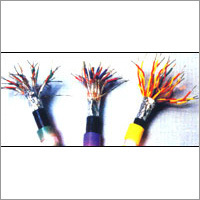
Compensating Cables
200 INR/Meter
Product Details:
- Product Type Compensating Cable
- Number of Conductor 2, 4, 6, 12, 24 (As required)
- Conductor Diameter 0.2 mm to 2.5 mm (As per specification)
- Conductor Number Single & Multi-stranded
- Armored Material Galvanized Steel Wire, Aluminum, or as specified
- Jelly Filled Optional, available on request
- Rip Cord Available for easy jacket removal
- Click to View more
X
Compensating Cables Price And Quantity
- 200 INR/Meter
- 50 , , Meter
Compensating Cables Product Specifications
- 2 to 48 (Customized as per requirement)
- PVC, PTFE, FEP, XLPE (As required for application)
- 0.2 mm to 2.5 mm (As per specification)
- Withstands temperatures from -60C to +200C depending on insulation
- Single & Multi-stranded
- Suitable for fixed and flexible installations in industrial environments
- Galvanized Steel Wire, Aluminum, or as specified
- PVC, Teflon, PTFE, Silicone Rubber (Depending on application)
- Optional, available on request
- Upto 24 pairs (on request)
- 1, 2, 4, 6, 12, 24 (As per order)
- Available for easy jacket removal
- Compensating Cable
- 2, 4, 6, 12, 24 (As required)
- Color coded as per IEC standard or request
Compensating Cables Trade Information
- 1000 , , Meter Per Day
- 1-7 Days
- All India
Product Description
Under the direction of our adroit professionals, we have become an affluent manufacturer, exporter and supplier of prime quality Compensating Cables. Offered cables are indispensable for precise temperature measurement and serve as extension leads from the thermocouple sensor to the measuring instrument. These cables are manufactured in compliance with the international quality standards using high quality raw materials and modern techniques. The provided Compensating Cables can be availed from us in different specifications as per the requirements of clients.
Key Features:
- Excellent mechanical & electrical properties
- Heat resistance, Durability, Flexibility
More Details:
The series of compensating cables (sometimes also called thermocouple extension cables) offered by us is used in measuring temperature, connecting the measuring instrument and thermocouple. The difference between these two cables is that thermocouple extension cables have the same alloy of thermocouple; whereas the avant-garde compensating cables use a different alloy. This is helpful in providing negative as well as positive cores for matching the elements of thermocouple elements. These said elements are featured with a matched thermal E.M.F output over suitable range of temperature.
Applications and Compatibility
These compensating cables are engineered for industrial temperature measurement, linking thermocouples to control and monitoring devices. Suitable for environments requiring high durability and chemical resistance, they excel in manufacturing plants, laboratories, and engineering facilities. The versatility of insulation and jacket materials ensures compatibility with a wide range of thermocouple types and specific environmental challenges.
Construction and Customization
Constructed from high-quality annealed wires either solid or multi-stranded the cables feature optional shielding, armored layers, and jelly filling for added protection. They are customizable in terms of conductor diameter, core number, color coding, length, and packaging style, allowing seamless integration with existing measurement systems and catering to unique installation needs.
Durability and Safety Features
Compensating cables are built to withstand harsh conditions, including extreme temperatures from -60C to +200C, exposure to oils, chemicals, abrasion, and flame as per IEC 60332-3 standards. Flexible installation guidelines and robust design enhance long-term performance, providing reliable connectivity and improved safety in demanding industrial applications.
FAQs of Compensating Cables:
Q: How do compensating cables enhance the accuracy of temperature measurement systems?
A: Compensating cables use materials that closely match the thermoelectric properties of connected thermocouples, ensuring minimal signal loss or distortion during transmission, which results in more accurate temperature readings at the measuring instrument.Q: What are the benefits of using shielded compensating cables in industrial installations?
A: Shielded compensating cables, with options like overall aluminum mylar tape and drain wires, reduce electromagnetic interference, enhancing signal integrity and ensuring stable and precise temperature data even in electrically noisy environments.Q: When should I opt for jelly filled or armored compensating cables?
A: Jelly filled cables are suitable for moisture-prone environments, while armored cables using galvanized steel or aluminum offer added protection against mechanical impact or rodent damage. Both options improve cable longevity where environmental or operational hazards are present.Q: Where can these compensating cables be installed?
A: These cables are suitable for both fixed and flexible installations in various industrial environments, such as chemical plants, power stations, and manufacturing facilities, where resistance to harsh chemicals, oils, and extreme temperatures is important.Q: What process should be followed for selecting the right insulation or jacket material?
A: Choose insulation (PVC, PTFE, FEP, XLPE) and jacket (PVC, Teflon, PTFE, Silicone Rubber) based on the operating temperature, level of chemical exposure, flexibility requirements, and compliance with fire resistance standards to match your specific application needs.Q: What lengths and packing options are available for these cables?
A: Compensating cables are supplied in standard coils or drums of 100m and 200m, with customized lengths and packaging (coil, drum, or as specified) available to accommodate installation requirements and preferred handling practices.Q: How does using compensating cables benefit industrial temperature control systems?
A: By providing precise signal transmission and durable construction, compensating cables help maintain accurate process temperatures, ensure safety compliance, and reduce downtime caused by measurement errors or cable failure, thereby optimizing operational efficiency.Tell us about your requirement

Price:
Quantity
Select Unit
- 50
- 100
- 200
- 250
- 500
- 1000+
Additional detail
Mobile number
Email


 Contact Us
- Plot No. 18, 2nd Floor, Rabindra Sarani,Kolkata - 700001, West Bengal, India
- Phone : 08045805156
M.E.M. INDUSTRIES
GST : 19AEPPM3828K1ZU
GST : 19AEPPM3828K1ZU

- Mr. Vishal Mohta (Vice President)
- Mobile : 08045805156
-
 Send Inquiry
 Send Inquiry
 Products
 Send Inquiry
 Send SMS
M. E. M. INDUSTRIES
All Rights Reserved.(Terms of Use)
Developed and Managed by Infocom Network Private Limited.
Developed and Managed by Infocom Network Private Limited.

